Content Advisory
This story may depict violence, disturbing scenes, and other mature themes. Reader discretion is advised.
Masks of Nyarlathotep - Prologue: Peru
Part 1 - The Dinner at Bar Cordano
Lima, Peru. March 1921.
"…shapeless lurkers and caperers in darkness, and vacuous herds of drifting entities that pawed and groped and groped and pawed; the nameless larvae of the Other Gods, that are like them blind and without mind, and possessed of singular hungers and thirsts."
- H. P. Lovecraft, The Dream-Quest of Unknown Kadath
It is 1921 - a golden age of discovery, of ambition, of a world still trembling from the wounds of the Great War yet pressing forward with trembling optimism. Aeroplanes cross continents. Radio voices leap between cities. Science promises to illuminate every last shadow the old world left behind.
And yet some shadows do not yield to light.
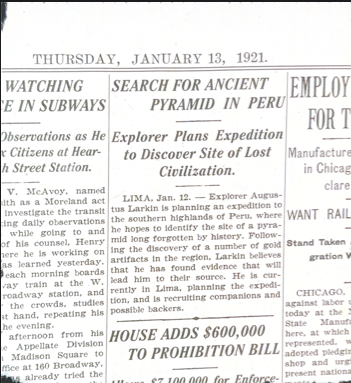
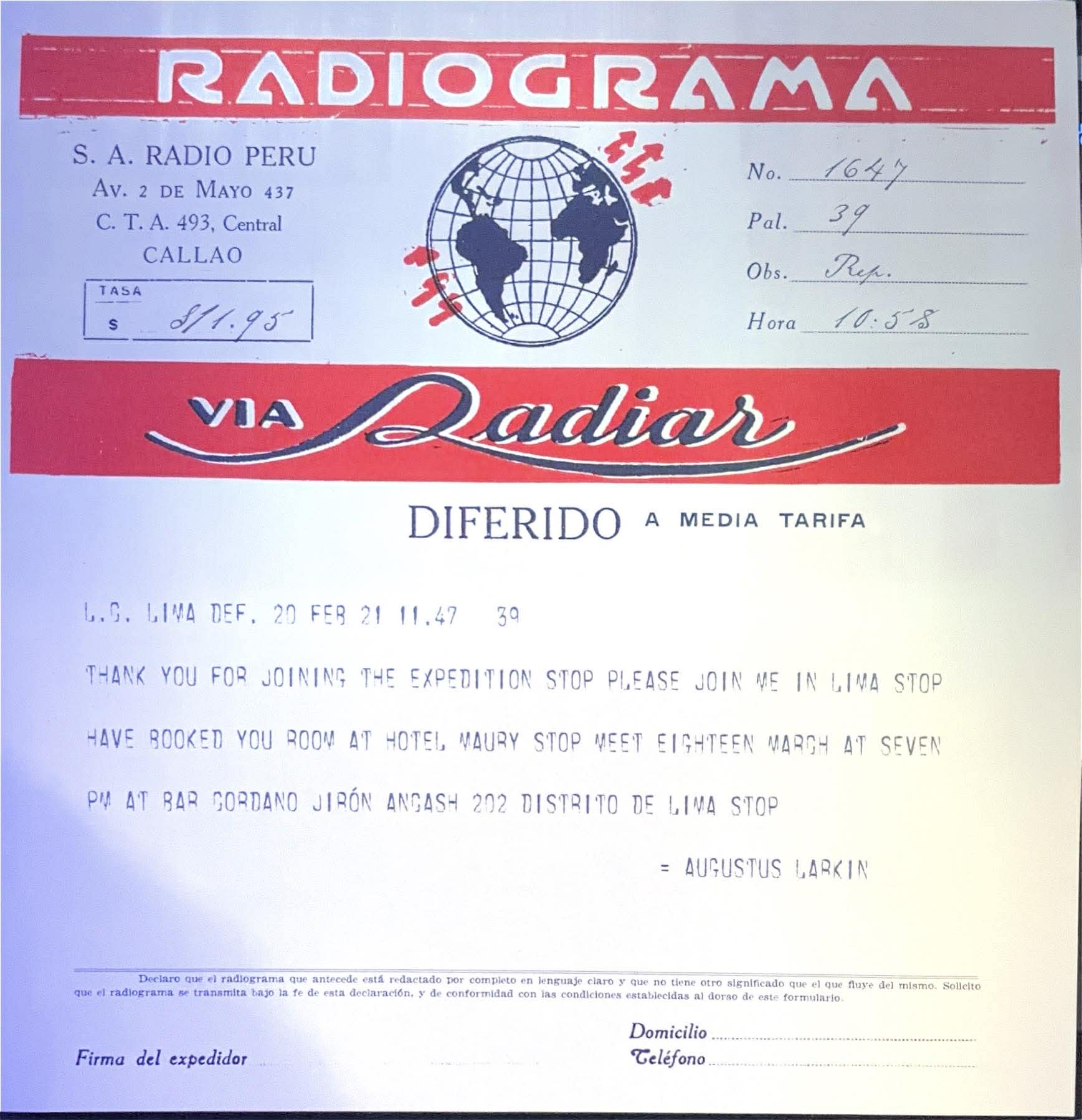
Somewhere between the newspaper pages celebrating technological marvels, a curious advertisement has been making the rounds in the international press. An explorer by the name of Augustus Larkin claims to have located a lost pyramid somewhere in the remote Andean highlands of Peru - a structure of unknown origin, possibly older than the Incan Empire itself, and reportedly filled with artifacts of incalculable value. He is assembling a small, select expedition. He is looking for the right people.
He found you.
The Investigators
From different corners of the world, fate - or perhaps something older and darker than fate - has drawn together a peculiar company.
Margaret Wyatt carries herself with the quiet gravity of someone who has known loss at close quarters. Daughter of the famous Wyatt family, whose tragic end is spoken of in hushed tones by those who knew them, she has reasons of her own for seeking the unknown. At her side, as always, walks Floyd Glover - the Wyatt family butler, loyal beyond the point where loyalty ends and something deeper begins. Where Margaret goes, Floyd follows. It has always been so.


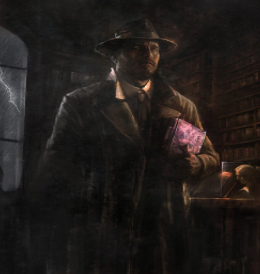
Then there is Daniel Craft, a journalistic investigator with ink-stained fingers and the look of a man perpetually on the verge of the scoop that will finally turn his career around. Peru, pyramids, mysterious gold - there is a story here. There is always a story.
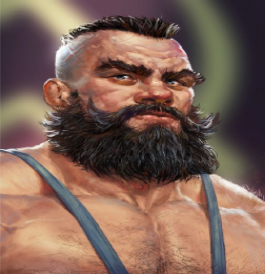
And there is Boris Zangif - a name that needs no introduction south of the Rio Grande. The famous Russian luchador, known from Mexico City to Guadalajara and reportedly beyond, brings to this unlikely gathering exactly what any expedition into the Andean wilderness could ask for: muscle, resolve, and a certain magnificent indifference to danger.
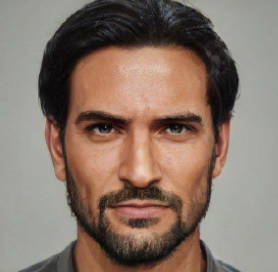
Later, as the expedition begins to take shape, they will be joined by one more: Dario Cáceres Quispe De La Cruz, a nurse working the emergency wards of a Lima hospital, a man who stumbled into the orbit of this expedition the way people sometimes stumble into things that will change their lives entirely - by accident, and then all at once.
Bar Cordano, Lima - 7 p.m., March 18th
The Bar Cordano is one of the better establishments Lima has to offer - wood-panelled walls, tiled floors, the smell of good seafood and warm bread, and the particular hum of a room full of people with money and ambitions. The investigators are shown to a reserved table where three men are already seated, waiting.
The first impression of Augustus Larkin is not what one might expect of an expedition leader.
He is not unpleasant. Quite the contrary - he is warm, self-deprecating, quick with a joke. He speaks enthusiastically of the lost pyramid, of Tiwanaku cultural parallels, of the golden artifacts he claims to have purchased from a local farmer as proof of the site’s existence. He produces them at dinner: a pendant in the form of a man holding two rods or staves, and a golden cup inlaid with turquoise, carved with geometric patterns. They are beautiful. They are also, for the archaeologically inclined, subtly wrong - the two pieces are from entirely different periods and cultures, which raises questions Larkin does not seem eager to address.
Because the second impression of Augustus Larkin is harder to ignore: the man looks ill. Profoundly, disturbingly ill. His skin is the colour of old wax. His white linen suit - expensive once, now hanging loose on a frame that has clearly shed considerable weight - is damp at the collar. He sweats despite the mild evening. There are shadows under his eyes that no amount of sleep seems to have touched. He laughs and gestures and reassures, insisting it is merely the long-term effects of malaria, that it will present no difficulty on the expedition - do not worry, not at all - but his hands tremble slightly when he reaches for his wine glass, and anyone watching closely enough notices that his veins, visible at the wrist, are oddly discoloured. Almost black.
He wears too much cologne. Not enough to hide the other smell, faint but unmistakable in the close air of the restaurant - something rotten, underneath.
Beside him sits his personal aide and bodyguard: Luis de Mendoza. A gaunt man with pronounced cheekbones and deep-set blue eyes the colour of old ice. He does not eat. He does not speak unless addressed. He watches everyone at the table with the still, patient attention of something that is not in any hurry whatsoever. When he does speak, his Spanish carries an accent no one can quite place - archaic, almost, like a language preserved in amber. A successful read of the room reveals a particular coldness directed at one person in particular: the third man at the table.
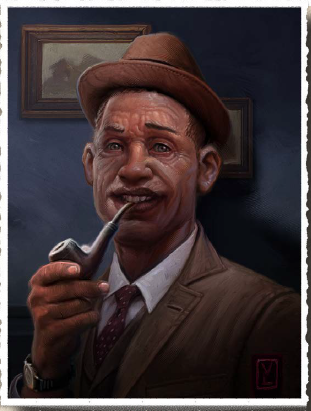
Jesse Hughes, introduced as a folklorist from New York City and a new addition to the expedition, seems pleasant enough - a compact, well-dressed man with a pipe and an easy sardonic smile. He listens to Larkin’s pitch with careful attention, asks the occasional pointed question, and says very little about himself. The tension between him and de Mendoza is present from the first moment - a thin wire drawn tight between them, invisible but almost audible.
Over the meal, Larkin lays out the expedition: three hired trucks leaving Lima on the morning of Monday the 21st, heading south toward the city of Puno on the shores of Lake Titicaca, then overland by pack animal into the highlands where the pyramid waits. He promises reimbursement for any supplies, answers questions about logistics with practiced charm, and manages throughout to make the whole enterprise sound entirely reasonable.
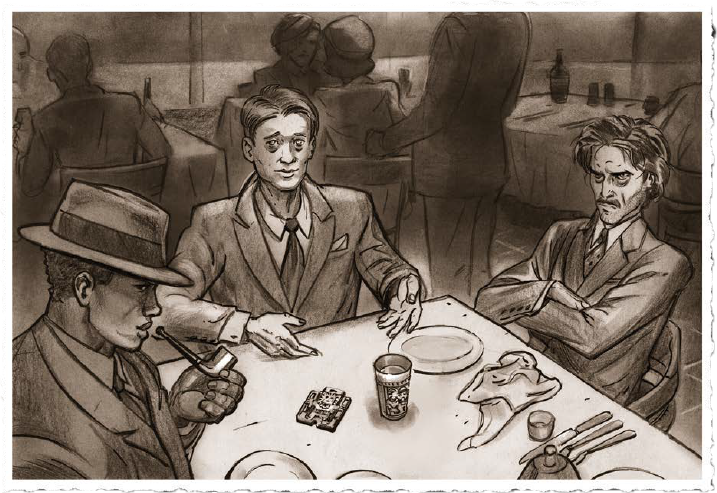
What he cannot quite manage is to look healthy. By the end of the evening, he is perceptibly paler than when he sat down, his hands shaking more openly now. He makes his excuses - early night, the journey ahead, the malaria acting up - and departs with de Mendoza at his heel, the bodyguard’s unblinking gaze sweeping the table one last time before they disappear into the Lima night.
After Dinner - The Truth About Jesse Hughes
With Larkin and de Mendoza gone, Jesse Hughes sets down his pipe and looks at the investigators across the candlelit table.
The sardonic smile is still there. But there is something more serious underneath it now.
He tells them his real name: Jackson Elias. The name may ring a bell - he is the author of Sons of Death and several other well-regarded books exposing death cults across the world. He is not a folklorist. He is a writer, a researcher, and a man with a very healthy instinct for when something is deeply wrong.
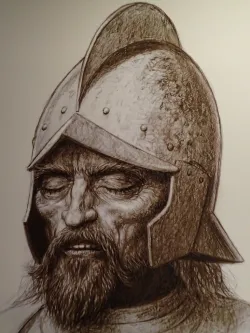
He has been in Peru for months. He came following a trail of something he initially believed to be a human cult - drawn here by stories of a local legend: the Kharisiri. In Andean folklore, the Kharisiri are pale-faced monsters - sometimes described as conquistadors, sometimes as priests - who ambush lone travellers in the highlands and drain the fat from their bodies, leaving behind emaciated, barely-living husks. Elias is a rational man. He does not believe in monsters. What he believes in is death cults, in human beings doing terrible things in the name of something they call sacred, and he is convinced that behind the Kharisiri legend lies exactly that: an organised group of killers, abducting and murdering people in the region around Lake Titicaca, probably for decades.
And he believes that Augustus Larkin is connected to it.
How? He is not certain. But Larkin’s attempts to recruit foreigners for this expedition are suspicious - locals have refused him, repeatedly, which suggests that people who know this area understand something about the pyramid and its surroundings that Larkin is not telling his recruits. De Mendoza, meanwhile, has been identified to Elias by multiple sources as a suspected Kharisiri himself - though Elias takes this as metaphor rather than literal fact. He is a dangerous man. A man to be feared. A man who has been asking questions in the wrong places.
Elias has a contact at the National University of San Marcos - a Professor Sánchez, an archaeologist who has been trying to reach Larkin for months and been rebuffed at every turn. Tomorrow, Elias intends to visit him. There may be documents in the university archives. There may be answers.
He would very much like the investigators to come with him.
The question, hanging in the warm Lima evening air, is simple enough:
Do you trust him?
And if you do - what, exactly, have you walked into?
To be continued in Part 2 - The University, and the Thing in the Storeroom.
The Masks of Nyarlathotep campaign was originally written by Larry DiTillio and Lynn Willis, published by Chaosium. This narrative account reflects our table’s playthrough and is written for personal, non-commercial use.